Tournament control for TDs, organizers, and venues that need the room to run cleanly
CUE PLAY gives organizers one operating layer for roster management, bracket flow, table assignment, live scoring, results, and public event visibility. It is built around real event pressure, not ideal conditions on paper.
Built to reduce friction before, during, and after the event
Before the event
- Create the event and define structure, format, race, and venue details
- Prepare the roster and seeding
- Publish a clear event home before play begins
During the event
- Keep brackets, tables, and live matches moving
- Reduce manual confusion around calls, progression, and updates
- Handle issues without losing control of the room
After the event
- Publish final results and placements cleanly
- Keep a public event record that still matters after the last match
- Turn event execution into trust for future events
How organizers run an event through CUE PLAY
Create and configure the event
Set the title, venue, structure, discipline, race conditions, timing, and operational basics before the room opens.
Prepare the field and run the draw
Bring players in through app sign-up, import or edit the roster where needed, handle last-minute changes, seed correctly, distribute byes, and generate the bracket structure with a clean operational record behind it.
Manage live table flow
Assign tables, start matches, follow room pace, and keep the event moving without relying on scattered updates.
Resolve issues without losing the room
Handle disputes, edits, walkovers, or operational corrections through controlled organizer tools instead of improvised fixes.
Publish results and close the event professionally
Finish with standings, placements, and a public result layer that still reflects well on the event after it ends.
For venues, better event operations create direct business value
- Save staff time by reducing manual registration checks, payment confirmation work, and repeated player questions
- Replace paper sheets, scattered chat groups, and manual score updates with one clearer operating flow
- Keep staff focused on tables, customers, food, drinks, coaching, and room service instead of admin cleanup
- Give players a more professional experience before, during, and after competition
- Run more events, leagues, and recurring formats without adding the usual operational headache
- Respond more easily to player demand with new formats, handicaps, doubles, and experimental event structures
- Turn smoother event execution into repeat traffic, stronger venue trust, and more reasons for players to come back
Why venues pay for better event software
- Less manual admin means lower operational drag on staff and ownership.
- Cleaner registration and payment flow saves time and reduces avoidable mistakes.
- Better table flow improves room utilization during tournaments and league nights.
- Smoother events keep players happier and reduce friction in the room.
- More event capacity means more chances to test formats and build recurring activity.
- More event capacity means more chances to test formats and build recurring activity.
- Operational software should create leverage, not overhead.
Inside the organizer workflow
CUE PLAY is built to support the real operating rhythm of an event: control the room live, inspect bracket flow, publish clear draw material, and use printed match tickets when the event needs stronger verification and a physical record behind the score. The goal is not only to digitize the event. The goal is to make it feel more professional and easier to trust.
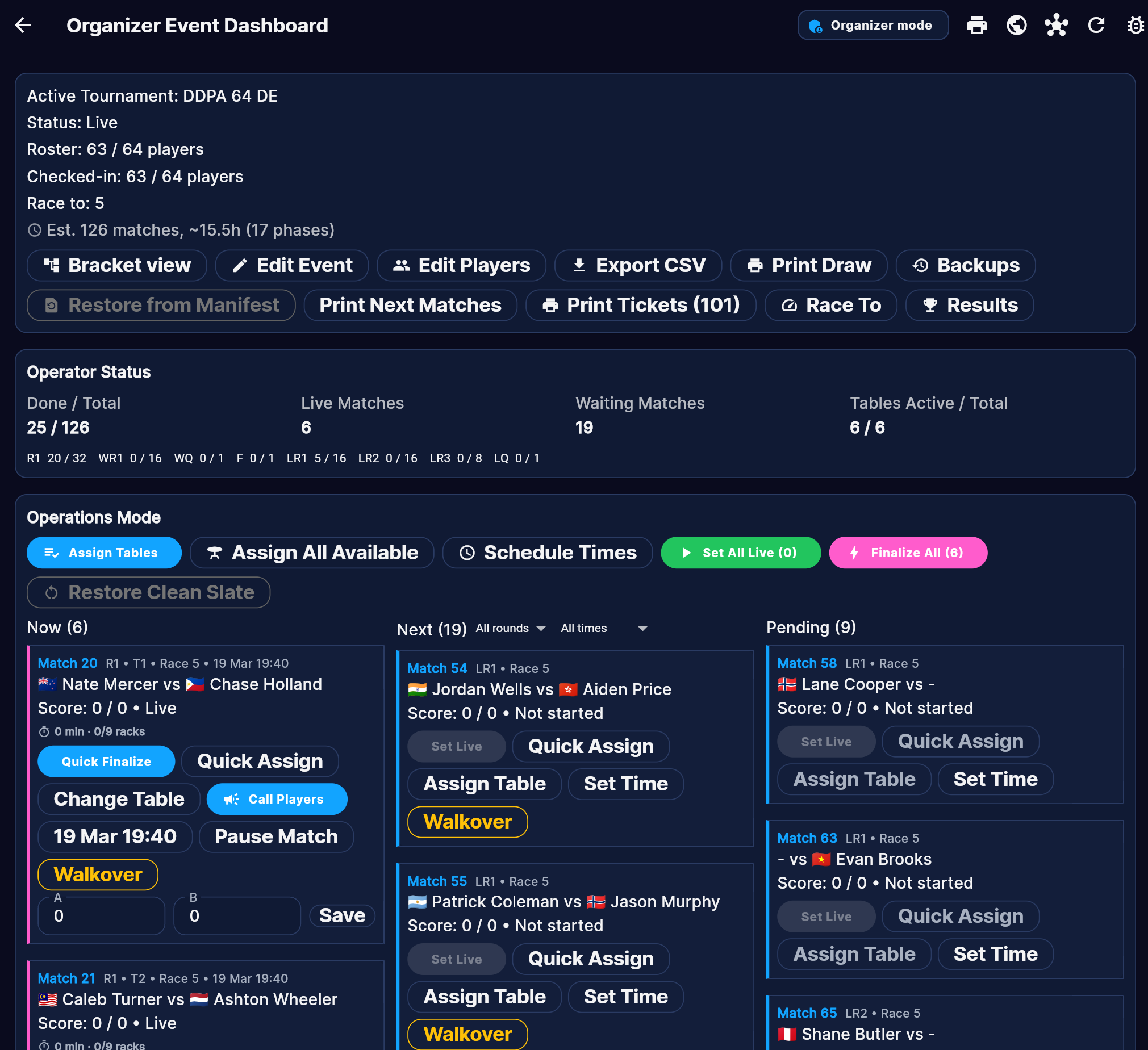
Live room control
The dashboard gives TDs and organizers one operating layer for roster status, live and waiting matches, table pressure, quick assignments, and controlled intervention when the room is moving fast, so they spend less time trapped behind the bracket board.
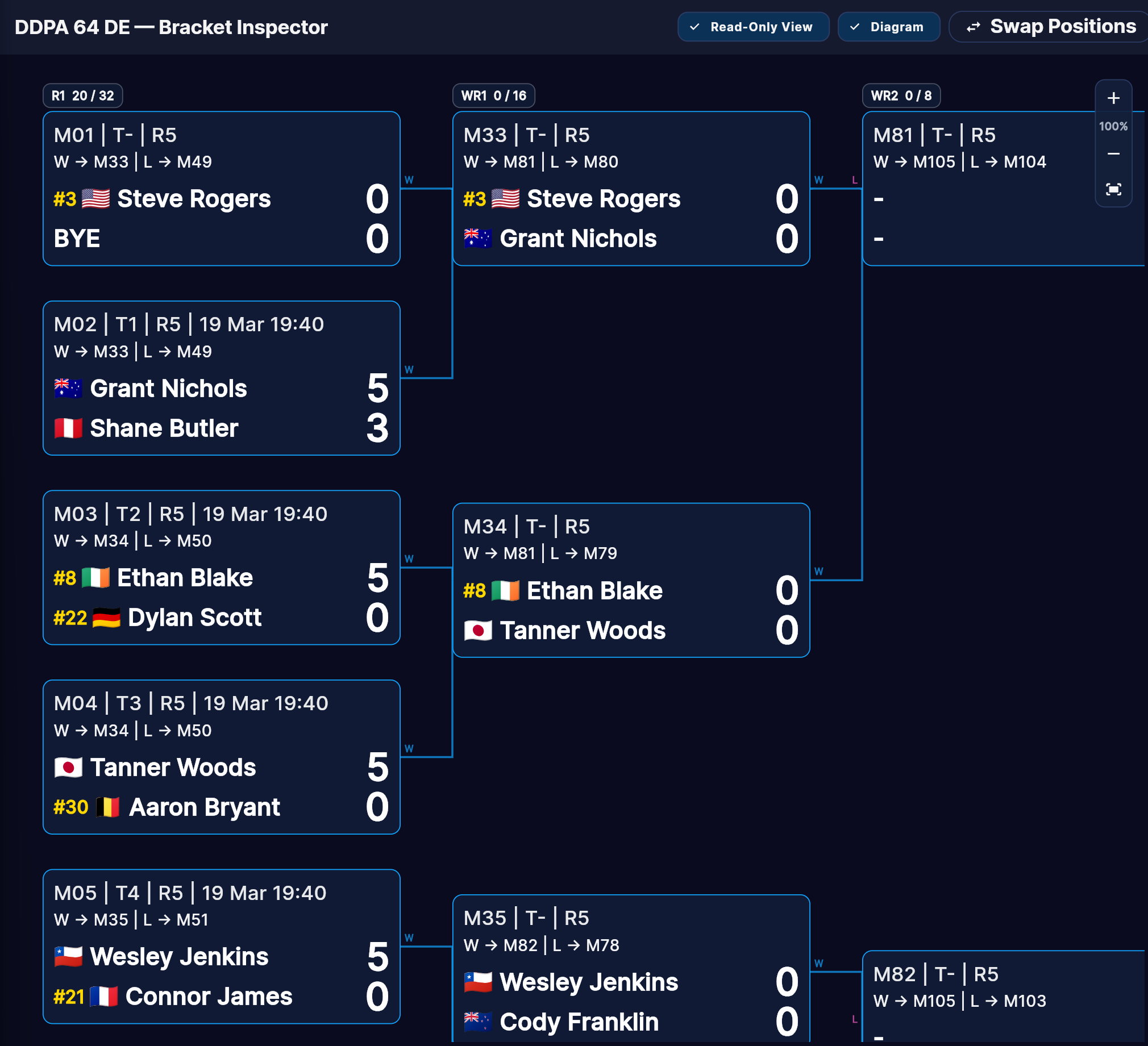
Bracket inspection without guesswork
The bracket inspector makes progression, byes, seeding, and downstream match flow visible in a format that is easier to trust than scattered updates, paper notes, or verbal bracket calls.
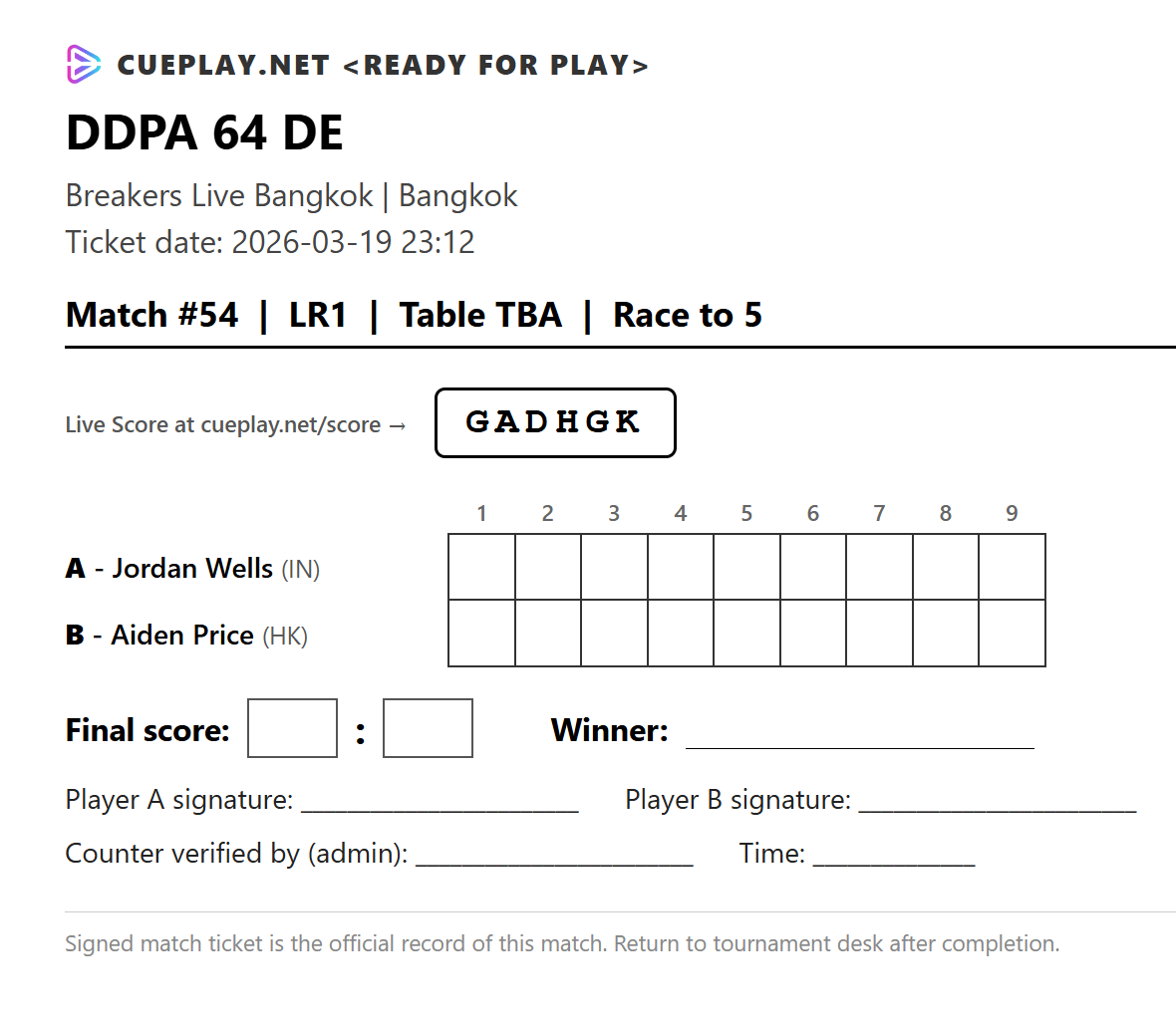
Printed match tickets for clarity and integrity
Printed tickets add an extra layer of operational control in professional conditions. They help confirm assignments, support score verification, and provide physical proof of the match when disputes or input mistakes need to be resolved quickly.
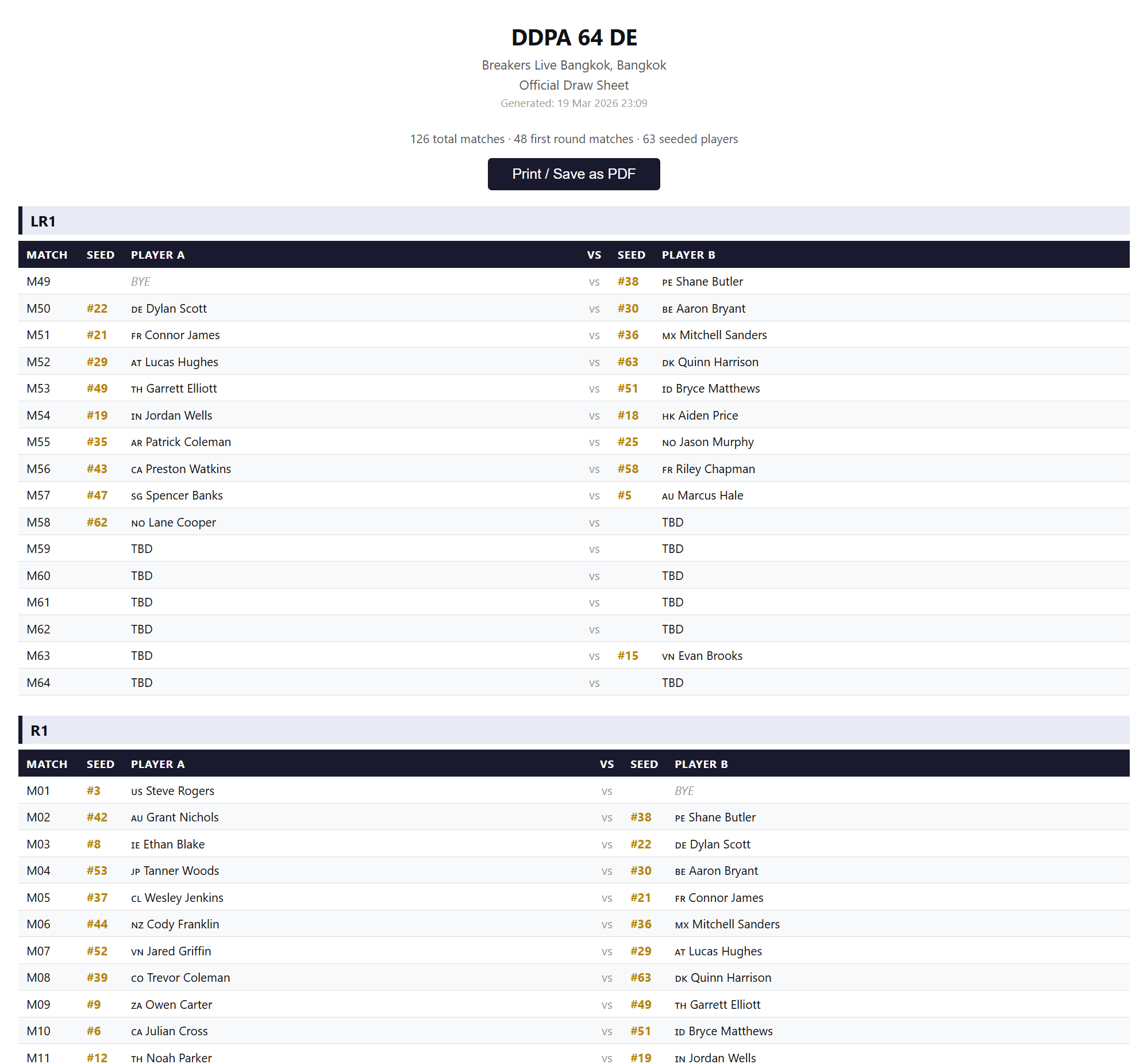
Printable draw output
Clear printable draw sheets still matter for rooms, walls, desks, and staff who need an easy public-facing reference alongside the live digital layer, especially when the event needs to look orderly and professional to everyone in the room.
Better event software should also help the venue think more clearly
CUE PLAY should not only help a venue run the event in front of them. It should also help the venue understand what happened, where time was lost, where demand was strongest, and how to plan the next event without damaging normal room revenue. That matters because better decisions compound across leagues, tournament series, staffing, and table planning.
- See which event types attract the most interest and participation.
- Understand registration demand, check-in patterns, and no-show pressure.
- Spot scheduling bottlenecks and dead time between rounds.
- Review table utilization during the event, including which tables were active and which stayed underused.
- Plan table allocation more intelligently so tournament activity does not quietly destroy table-rental revenue.
- Learn which formats, schedules, and room setups are worth repeating.
Organizer credibility comes from live matchday performance
Pattaya Open 2026 proved that the core operations stack could hold up under real tournament pressure: a large international field, a busy room, serious expectations, and live event conditions where mistakes would have been obvious immediately. That matters because organizers do not need theory. They need to know the room can keep moving when the pressure is real.